


Online services have become part of everyday digital life, from streaming platforms and VPNs to cloud storage, file-sharing tools, software subscriptions and entertainment apps. The convenience is clear, but the number of available options has made decision-making more complicated. Many services appear similar at first glance, yet differ significantly in pricing, privacy terms, cancellation rules, payment methods and customer support.
This has made comparison websites more important. Instead of relying only on advertising claims or a single company’s own website, consumers increasingly look for independent sources that organise information in a clearer way before signing up.
Digital Services Are Harder to Judge at First Look
A clean website and a discounted monthly price can create confidence quickly. However, the real value of an online service often becomes clear only after the details are checked. A VPN may advertise fast speeds but limit access to certain servers on cheaper plans. A streaming platform may promote a large content library but restrict availability depending on location. A file storage tool may offer low-cost entry plans but charge more for backup, sharing or extra security features.
These differences are not always obvious from the homepage. Terms can be spread across multiple pages, and trial offers may lead into automatic renewals. In some cases, users only discover the limitations after creating an account or adding payment details.
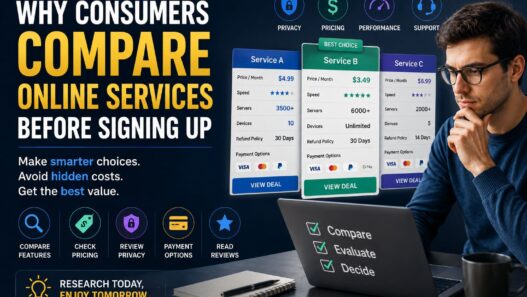
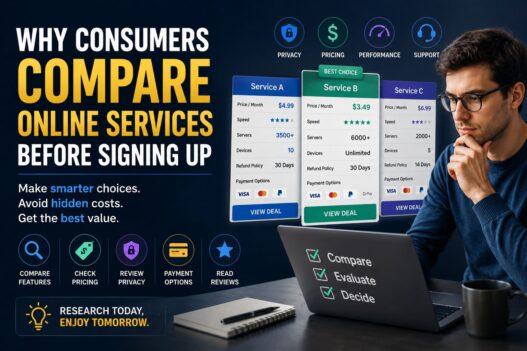
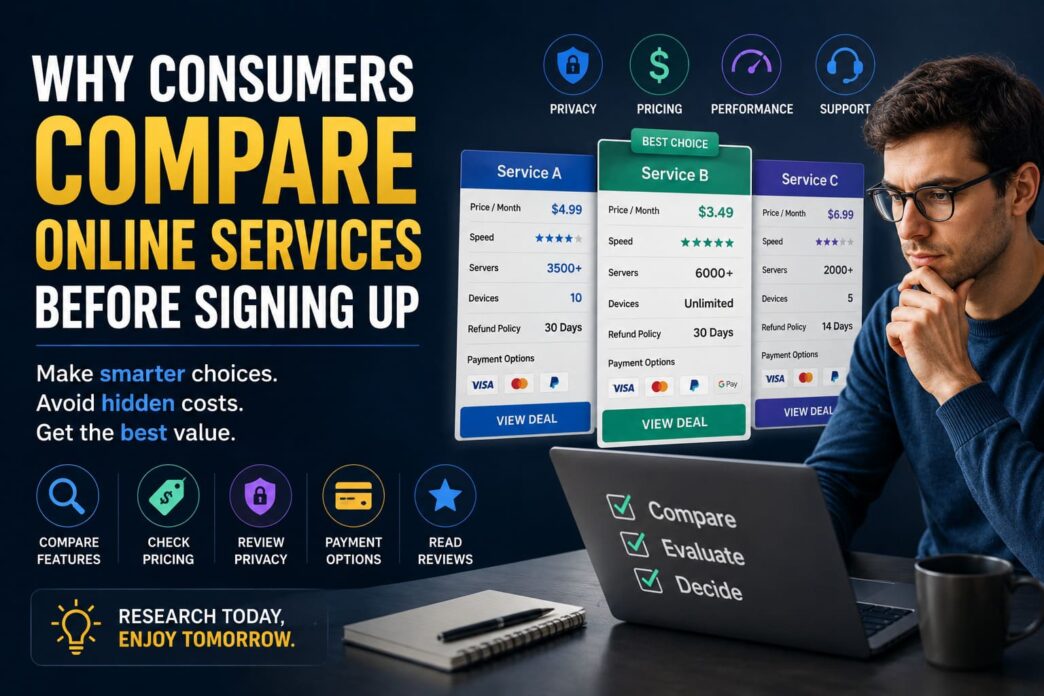
Comparison platforms help reduce this uncertainty by bringing key information into one place. They make it easier to look at features, costs, restrictions and practical use cases side by side.
Independent Reviews Add Context
Good review websites do more than list prices. They explain how a service works in real situations. This matters because online services are rarely judged on one factor alone.
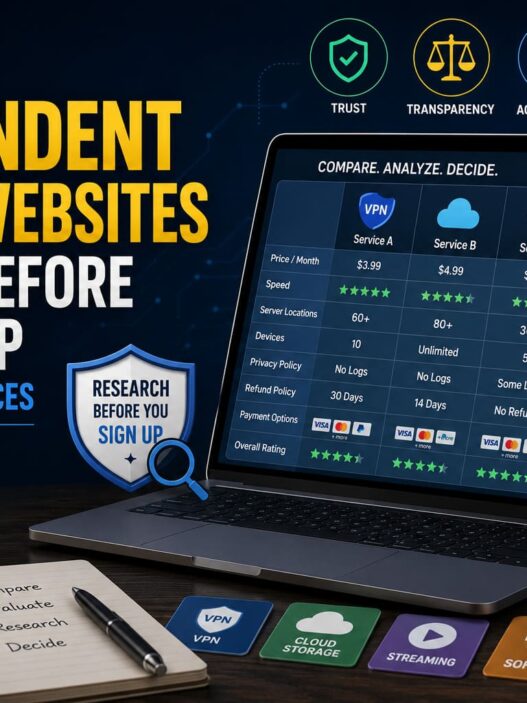
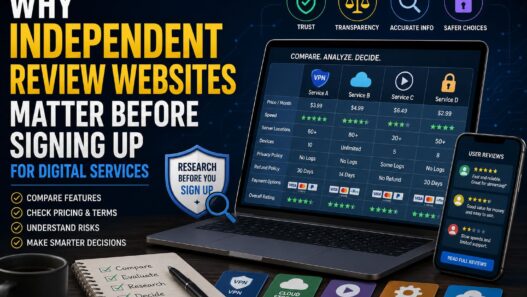
For example, someone comparing VPNs may want to know about speed, privacy policies, server locations, device support and refund terms. A person choosing cloud storage may care about file size limits, sharing permissions, encryption and recovery options. A user looking at software tools may compare ease of use, compatibility, update frequency and customer support.
The same approach is also seen in more specialised areas of online entertainment. Review pages such as pikakasinot show how comparison formats can organise details such as platform features, payment options, usability and sign-up conditions in a single place. The broader point is not limited to one category. It reflects a larger shift in how consumers evaluate digital services before making a commitment.
Payment Options Are Part of the Decision
Payment flexibility has become one of the most important comparison points. Many online platforms now support cards, bank transfers, e-wallets, prepaid options and regional payment systems. Some services also offer faster settlement methods or alternative payment choices for international users.
For consumers, this matters for both convenience and control. A preferred payment method may make a service easier to use, while clear billing terms help avoid unwanted renewals or unexpected charges. In digital entertainment, media subscriptions, software tools and privacy services, payment clarity can be just as important as the advertised monthly price.
Comparison websites often highlight these details because they are easy to overlook. A service may look affordable, but the payment process, renewal structure or withdrawal rules may change the overall experience.
Trust Depends on Clear Information
The value of a comparison website depends heavily on transparency. A useful platform should explain how it reviews services, how often information is updated and whether commercial partnerships affect rankings. Without this clarity, a comparison page can become just another form of advertising.
Consumers are becoming more aware of this issue. Many now look for review sites that include practical pros and cons, clear category filters and updated information. This is especially important in fast-moving online markets, where services frequently change pricing, terms and features.
Outdated reviews can create real problems. A file-sharing tool that was once reliable may later include intrusive ads. A VPN that previously offered strong performance may reduce server quality. A subscription platform may change its cancellation process. Reliable review websites need to keep pace with these changes.
Safer Sign-Ups and Fewer Surprises
One of the main reasons consumers compare services is to avoid surprises after signing up. These surprises may include hidden fees, weak support, complicated cancellation steps, limited device compatibility or unclear privacy policies.
For torrent users and online media consumers, this research can be particularly useful. Many tools claim to improve speed, access or privacy, but the quality varies widely. Independent comparisons can help separate genuinely useful services from platforms that are poorly maintained or unclear about data handling.
This does not mean every decision can be made from a review alone. Personal needs still matter. A heavy downloader may prioritise speed and privacy. A casual streaming user may focus on device support and price. A small business may care more about reliability and customer service. Good comparison platforms support these decisions by making the trade-offs easier to understand.
Businesses Also Face More Pressure
Comparison websites do not only help consumers. They also push businesses to improve. When services are placed side by side, weak areas become more visible. Companies with unclear pricing, slow support or limited features may struggle against competitors that communicate better and deliver stronger value.
This can make the digital marketplace healthier. Instead of competing only through ads or temporary discounts, businesses are encouraged to improve service quality, transparency and user experience.
Conclusion
As online services continue to grow, consumers are likely to rely even more on independent comparison websites before signing up. The digital market now offers more choice than ever, but more choice does not always make decisions easier.
Comparison platforms help by organising details, highlighting risks and explaining differences that may not be visible at first glance. For digital tools, media services, privacy products and online entertainment platforms, that extra layer of research can make the difference between a smooth experience and a frustrating one.